Stronger. Safer. SMILE Pro.

1. A Decade of Trust, Built on Millions of Procedures
SMILE surgery first gained traction in 2007 and has since become widely adopted across the globe. Over the past decade, more than 1 million cases have been performed, and by 2025, the number has surged to over 10 million worldwide. Behind this impressive growth lies a foundation of surgical precision and a wealth of accumulated clinical data that continues to support consistently safe and stable outcomes.
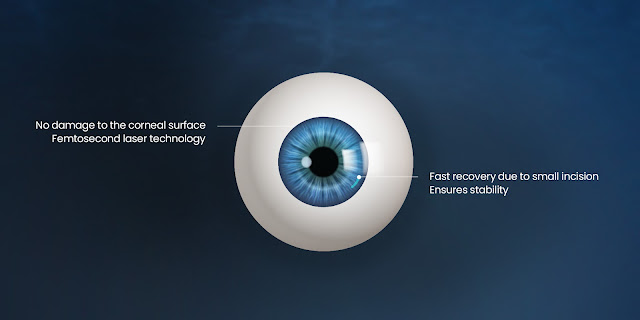
Unlike traditional LASIK or LASEK procedures, SMILE is performed through a minimally invasive incision, which significantly reduces recovery time and post-operative discomfort. This allows patients to return to daily life more quickly and comfortably, making SMILE an attractive option for those who want effective results with minimal disruption. The reduced physical burden on the eyes has made it especially popular among patients seeking both safety and convenience.
 |
| ▲ SMILE Pro: Clinically Proven Through Extensive Trials Before its Introduction in Korea |
2. The Evolution of SMILE — The Rise of SMILE Pro
In 2023, SMILE underwent yet another significant advancement and was upgraded under the name “SMILE Pro.” This next-generation vision correction procedure, performed with ZEISS’s newly developed VisuMax 800, is built on superior, refined technology compared to previous methods. The laser application time has been dramatically reduced, and the addition of advanced eye-tracking technology enables even greater precision during surgery.
Furthermore, enhanced correction capabilities for astigmatism allow for a more customized surgical approach tailored to a wider range of vision conditions. These technological improvements play a crucial role in minimizing the gap between pre- and post-operative vision, delivering highly predictable and stable results.
 |
| ▲ SMILE Statistics: Reliable Correction Achieving Predicted Vision Outcomes |
3. SMILE Pro — Proven Safety and Efficacy Backed by Data
A common concern with any new medical technology is whether it has been sufficiently validated. In the case of SMILE Pro, such concerns are thoroughly addressed by strong clinical evidence. Even before its official introduction to Korea, the procedure had already been performed over 60,000 times across Europe and other regions, clearly demonstrating its safety and effectiveness. Since its launch in Korea, tens of thousands of additional cases have been performed, rapidly accumulating domestic data.
What’s most important is that SMILE Pro is built upon the same fundamental principles and surgical system as the original SMILE procedure. This continuity allows existing clinical expertise and surgical know-how to be fully transferred to SMILE Pro. In fact, the very same medical teams that have performed conventional SMILE surgeries are now performing SMILE Pro as well — further enhancing procedural stability.

4. Personalized Vision Correction with Nomogram Technology
Another key reason SMILE Pro offers a more advanced and reliable vision correction experience lies in its use of a nomogram-based customization system. A nomogram is a predictive model that uses extensive clinical data to recommend optimal surgical settings tailored to each patient’s unique eye condition. Because every person has different corneal thickness, curvature, and visual acuity, even the same surgical technique must be adjusted accordingly.
With SMILE Pro, these personalized parameters can be precisely incorporated into the procedure design, resulting in immediate improvements in vision and minimal disruption to daily life. Most patients report clear vision shortly after surgery and are able to resume normal activities as early as the following day. These outcomes have been consistently validated through a growing number of successful clinical cases.
5. Precision Technology Backed by Experienced Surgeons
Ultimately, in vision correction surgery, the combination of advanced technology and experienced medical professionals is what determines the quality of results. While SMILE Pro features state-of-the-art equipment, it is the expertise and judgment of the surgeons that bring out the full potential of the procedure. This is why, when choosing a clinic, it's essential to look beyond just the availability of new technology and also consider how long and how reliably the medical team has been performing such procedures.
Each patient’s eyes are structurally different, so a detailed preoperative assessment and thorough consultation are crucial before surgery. A clinic’s ability to provide this level of comprehensive evaluation and care should be a major factor in deciding where to undergo surgery.

Comments
Post a Comment