What is SMILE LASIK side-cut?

1. The Role of the Side-Cut in SMILE Surgery, Where Precision is Key
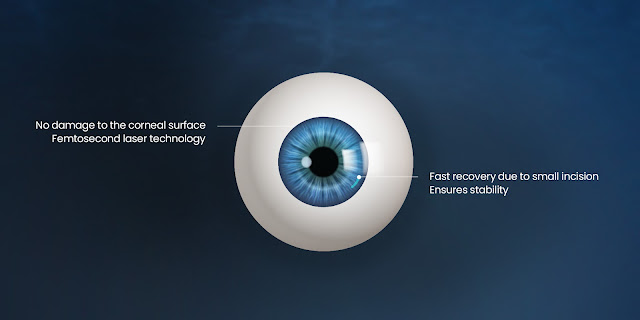
SMILE (Small Incision Lenticule Extraction) surgery is an advanced vision correction technique that does not involve creating a corneal flap and instead corrects vision with a minimal incision. The core of this procedure lies in the precise removal of a tissue called the lenticule, located within the corneal stroma. The equipment used for this is the VisuMax from ZEISS. VisuMax utilizes a femtosecond laser to cut the front and back surfaces of the lenticule inside the cornea, enabling its safe extraction.
One of the crucial technologies in this process is the side-cut. The side-cut function incises the edge of the lenticule at a specific angle, allowing the separated tissue to be cleanly and accurately removed. This minimizes damage to the corneal tissue during surgery and reduces the overall operation time. If the incision is not precise, the lenticule might tear or fail to fully separate, which could negatively affect vision recovery. Therefore, the side-cut plays a vital role in enhancing surgical precision and achieving predictable outcomes.
2. The Side-Cut's Contribution to Surgical Stability and Recovery
The side-cut is more than just a tissue incision technique—it is a critical factor that directly impacts the stability of the entire procedure and the speed of recovery. If the lenticule does not separate smoothly within the cornea, surgery time may increase, placing greater stress on the eye. On the other hand, when the side-cut functions precisely, lenticule removal becomes much easier, tissue damage is reduced, and recovery is significantly faster.
Additionally, in the SMILE Pro procedure, a feature has been introduced that allows the incision to be moved from the traditional upper position (12 o’clock) to the lower position (6 o’clock), enabling a more customized approach based on the patient’s eye condition. A lower incision is less exposed to the line of sight, which can improve night vision quality and reduce side effects such as glare and halos. The ability to adjust the incision location represents not just a technical advancement but also a differentiated aspect that allows for personalized surgical outcomes.

3. Diverse Perspectives on the Side-Cut and Their Interpretations
Recently, various lenticule extraction techniques beyond SMILE surgery have been developed, and some devices are being promoted as safe even without a side-cut. Among these claims, there are opinions suggesting that the side-cut may actually contribute to visual disturbances such as glare or halos, but there is currently a lack of strong scientific or clinical evidence to support these assertions.
On the other hand, ZEISS SMILE surgery has proven its safety and technological reliability through over 10 million procedures performed worldwide and more than 800 SCI-level publications. According to research, the side-cut technique contributes to safer lenticule extraction and shows particularly strong outcomes in the correction of low myopia and astigmatism. In fact, the precision of astigmatism correction in SMILE surgeries is often within ±0.5 diopters, leading to the assessment that the side-cut enhances overall surgical accuracy rather than hindering it.

4. Proven Equipment and Skilled Technique Make a Clear Difference
The side-cut technology is a patented feature exclusive to ZEISS’s VisuMax device, meaning that even if other devices use similar lenticule extraction methods, they cannot match the same level of incision precision or clinical outcomes. Therefore, if you are considering SMILE or SMILE Pro surgery, it is essential to check whether the medical facility uses the VisuMax system, whether the surgeons have ample experience, and whether customized surgical planning is available for your specific eye condition.
Bright Eye Clinic in Gangnam is an officially certified provider of ZEISS SMILE surgery and offers individualized correction results based on detailed corneal analysis and extensive surgical expertise. Equipped with both the technology and know-how to reliably implement the side-cut—one of the key elements of SMILE—it provides a level of trust and precision that sets it apart.
Because your eyes are a lifelong sensory organ, choosing a vision correction procedure should not be based merely on cost or trends. Instead, the completeness and safety of the surgical technique should be the top priority. The side-cut may not be visible, but it plays a crucial role in determining the quality of the surgery, ultimately leading to clearer and more stable vision. If you're considering SMILE surgery, it is essential to clearly understand these technological differences and choose the right clinic and method tailored to your needs.

Comments
Post a Comment