Potential Complications of SMILE Surgery

Despite this, many hesitate to undergo vision correction surgery, largely due to concerns about potential side effects. But are these side effects truly as serious and burdensome as we often imagine? The short answer is that the vast majority of side effects from vision correction procedures are temporary and can be effectively managed. In particular, SMILE surgery — which has been gaining attention in recent years — is known for its faster recovery and significantly lower incidence of side effects compared to conventional procedures, earning positive feedback from many patients.
 |
| ▲ Extent of Corneal Epithelial Damage by Type of Vision Correction Surgery |
But why do such side effects occur? The primary reason lies in the extent of damage to the corneal epithelium. The corneal epithelium is a crucial structure that protects the eye and plays a role in tear production. If a large portion of this layer is removed during the procedure, the eye’s function may temporarily decrease, leading to symptoms such as pain or dryness.
 |
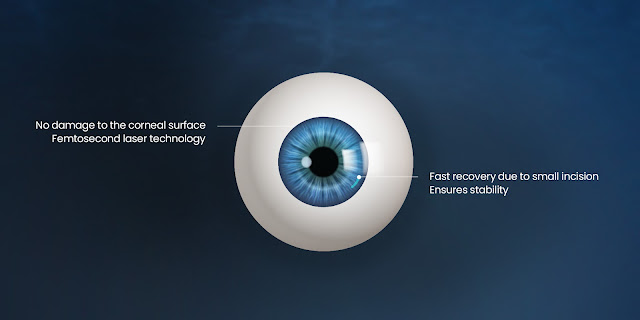
| ▲ Femtosecond laser technology that passes through the corneal epithelium without causing damage (right) |
Because this process does not involve extensive removal of the corneal epithelium, it minimizes damage to tear-producing cells and corneal nerves, thereby reducing the risk of side effects. As a result, the incidence of dry eye is lowered, and both post-operative discomfort and recovery time are dramatically reduced. In fact, many patients are able to return to work and daily activities without discomfort as early as the day after surgery. These clinical outcomes serve as strong evidence supporting the safety and reliability of SMILE surgery.
 |
| ▲ Goblet cells help maintain tear production and healthy eye function — when they are reduced, dry eye symptoms may occur. |
SMILE has received official approval from the U.S. Food and Drug Administration (FDA) and is also the procedure of choice for the U.S. military to improve soldiers’ vision — a testament to its recognized stability even under extreme conditions. This demonstrates that SMILE is not only a surgery with a low incidence of side effects but also a highly precise and safe vision correction method.
When considering vision correction surgery, side effects are often the first concern that comes to mind. The best way to overcome this fear is through understanding based on accurate information. SMILE, with its advanced technology that overcomes the limitations of conventional methods, can reduce side effects while delivering excellent visual recovery.
If you are feeling restricted in daily life due to the inconvenience of corrective devices, we recommend that instead of worrying, you undergo an accurate diagnosis and thorough consultation to find the vision correction procedure most suitable for your eyes. Side effects are not necessarily unavoidable dangers; they are often temporary changes that can be managed and addressed within a safe range.

Comments
Post a Comment