SMILE Surgery Side Effects
1. Are You Considering Vision Correction Surgery?
Even so, many hesitate to undergo vision correction surgery mainly due to concerns about side effects. But are these side effects really as serious as we imagine? In fact, most side effects from vision correction procedures are temporary and manageable with proper care. Especially with SMILE surgery, which has been gaining attention in recent years, recovery is faster and the frequency of side effects is significantly lower compared to older methods—making it a reassuring option for many patients.
 |
| ▲ Extent of corneal epithelial damage by type of vision correction surgery |
2. Where Do the Side Effects of Vision Correction Surgery Come From?
But why do such side effects occur? The main reason lies in how much the corneal epithelium is affected during the procedure. The corneal epithelium is an important layer that protects the eye and helps maintain tear stability. If a large portion of this layer is removed during surgery, the eye’s function may temporarily decrease, leading to discomfort such as pain or dryness.
 |
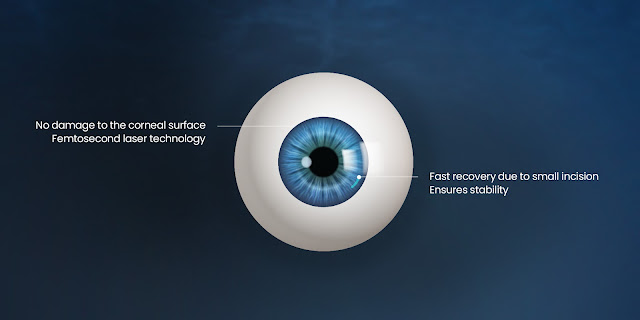
| ▲ Femtosecond laser technology that passes through without damaging the corneal epithelium (right) |
This significantly reduces the incidence of dry eye and shortens both post-surgical discomfort and recovery time. In fact, many patients are able to return to work and daily activities comfortably as early as the next day. These clinical outcomes strongly support the safety and effectiveness of SMILE surgery.
 |
| ▲ Goblet cells that maintain tear production and function; their deficiency can lead to dry eye syndrome |
4. Proven Technology – Global Numbers That Inspire Trust
SMILE surgery was developed by ZEISS, a German leader in optical technology, and has now been performed in more than 8 million cases worldwide, including over 1.3 million procedures in Korea. These are not just marketing figures, but evidence of the trust built among both medical professionals and patients.
SMILE has also received official approval from the U.S. FDA and has even been adopted by the U.S. military to improve soldiers’ vision—clear recognition of its ability to remain stable and effective even under extreme conditions. This demonstrates that SMILE is more than just a procedure with fewer side effects; it is a vision correction surgery defined by precision, safety, and proven reliability.
When people consider vision correction, concerns about side effects often come first. The best way to overcome that fear is with accurate information and proper understanding. With its advanced technology, SMILE minimizes side effects while offering excellent visual outcomes and faster recovery compared to older methods.
If glasses or contact lenses are limiting your daily life, don’t let worry hold you back. Instead, seek an accurate diagnosis and thorough consultation to determine which vision correction surgery best fits your eyes. Side effects are not necessarily permanent dangers but often temporary changes that can be properly managed.
It is also important to remember that not every procedure labeled as “SMILE” is the same. Only surgeries performed with ZEISS VisuMax equipment represent the genuine, validated SMILE technology. Choosing a trusted clinic with certified technology and experienced surgeons is the safest first step toward clear and healthy vision.

Comments
Post a Comment