The Difference Between Myopia and Hyperopia

When talking about vision, two common terms are myopia and hyperopia. Though many people have heard of them, few understand their underlying mechanisms and differences clearly.
Myopia (nearsightedness) means you can see nearby objects clearly, but distant objects appear blurry.
Hyperopia (farsightedness), on the other hand, is when close-up objects look unclear, while those farther away appear sharper.
These differences in vision are closely related to the structure of the eye.
In myopia, the eyeball is elongated, causing incoming light to focus in front of the retina.
In hyperopia, the eyeball is shorter, so the light focuses behind the retina.
Thus, mismatches between light refraction, eye length, and focal point position are the structural causes of myopia and hyperopia.

2. The eye health risks of high myopia
Myopia may seem like a simple decrease in vision, but as the degree increases, it becomes a major risk factor for various eye diseases.
In particular, high or pathological myopia can cause structural changes within the eye, putting strain on the retina. As a result, serious conditions such as retinal detachment, macular degeneration, and glaucoma may occur — leading to sudden vision loss, and in severe cases, even blindness.
These complications cannot be corrected by glasses or contact lenses alone. Therefore, people with severe myopia need regular eye examinations and proactive vision management.
If myopia progresses rapidly from childhood, it can easily develop into high myopia during growth — making early intervention crucial.
 |
| ▲ Estimated Number of People with Myopia and High Myopia from 2000 to 2050 (by decade) |
3. The Relationship Between Hyperopia and Aging
While hyperopia is often congenital, it can also develop acquiredly with age. The most typical example is presbyopia (age-related farsightedness).
Presbyopia occurs as the lens inside the eye loses elasticity and its focusing ability decreases with age, making it difficult to see nearby objects clearly. Although it may feel similar to hyperopia, the mechanism of occurrence is different.
As presbyopia progresses, the risk of cataract formation also increases. Cataracts occur when the lens becomes clouded, causing blurred or double vision, and making lights appear glaring or hazy.
These changes become more common with age, and without early diagnosis and treatment, they can significantly interfere with daily life.
 |
| ▲ Detailed Information on the Refractive Segments and Additional Near Zones of the Precizon CTF According to Pupil Diameter |
4. Different Vision Correction Options by Age
The methods of vision correction naturally vary depending on the condition of the eyes and the patient’s age.
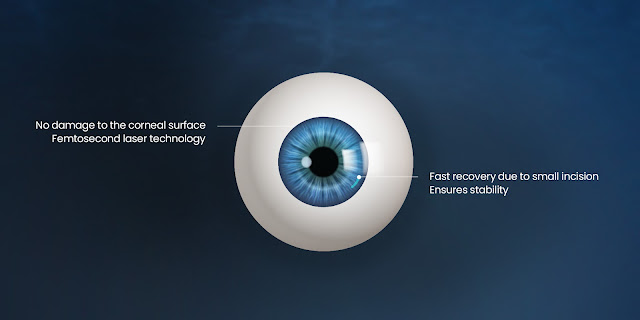
For younger individuals, temporary correction can be achieved with glasses or contact lenses, while those seeking a more permanent improvement may consider laser-based vision correction surgeries such as SMILE, LASIK, or LASEK. These procedures are popular because they offer fast recovery and stable, long-lasting results.
After middle age, vision problems often become more complex, combining issues such as myopia, hyperopia, presbyopia, and cataracts. In these cases, more advanced options such as multifocal intraocular lens (IOL) implantation are often recommended.
This procedure not only removes cataracts but also corrects both near and distance vision, making it especially effective for senior patients.
Ultimately, maintaining eye health requires early awareness and consistent care. It is important to consult with a qualified ophthalmologist to determine the most suitable correction method for each individual.
Regular eye examinations and prompt responses to any abnormal symptoms can play a major role in preserving long-term vision health.

Comments
Post a Comment