What are the advantages of SMILE LASIK for soldiers?

Because Eye Health Is Crucial for a Profession with Frequent Outdoor Activities
A soldier’s daily life is quite different from that of an ordinary office worker. Regular training, long hours of outdoor activity, and operations conducted in various climatic conditions all place them in physically demanding and harsh environments.
In such conditions, maintaining stable vision and eye health becomes extremely important. Outdoor activities often expose the eyes to rain, dust, and strong ultraviolet rays, all of which can easily irritate the eyes. Even minor injuries or dryness can significantly affect a soldier’s performance.
 |
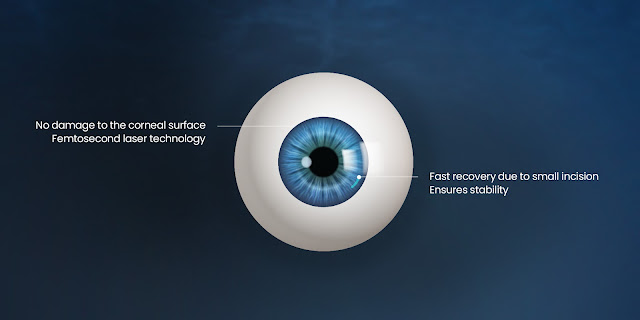
| ▲ SMILE procedure that preserves the corneal epithelium |
In particular, those who wear contact lenses or glasses often experience discomfort due to foreign body sensations, humidity, or physical impact. Contact lenses can easily cause irritation in dry environments, while glasses carry the risk of breaking upon impact. As a result, an increasing number of soldiers are considering vision correction surgery to reduce these inconveniences.
At one time, the most commonly chosen vision correction procedure among soldiers was LASEK. This method involves removing the corneal epithelium and reshaping the underlying stromal layer with a laser to correct vision. After the surgery, the epithelium regenerates, and the corneal structure remains relatively stable even under physical stress—an advantage for those in active service.
 |
| ▲ LASEK, which removes corneal surface peripheral nerves and can cause dry eyes during the recovery period |
Vision Correction Surgery Suitable for Military Environments
Recently, a vision correction procedure called SMILE has been gaining attention. Unlike LASEK, SMILE does not require extensive removal of the corneal epithelium. Instead, it involves creating a small incision through which a thin, lens-shaped piece of corneal tissue (called a lenticule) is separated and removed.
This method enhances corneal stability and effectively reduces the risk of dry eyes or infection after surgery. Another major advantage of SMILE is its rapid recovery time—most patients can return to normal activities within a day, making it an ideal option for soldiers who may have limited leave or rest periods.
 |
| ▲ VisuMax 800: enabling faster and smoother SMILE procedures |
SMILE Pro — A More Advanced Solution Driven by Technological Progress
Following the success of the original SMILE procedure, a next-generation technology called SMILE Pro has emerged, further enhancing the precision and effectiveness of vision correction for soldiers. SMILE Pro features improved laser speed and accuracy, allowing the corneal lenticule to be created in a shorter amount of time compared to the conventional procedure.
This not only minimizes irritation to the eyes but also enables a much more comfortable recovery immediately after surgery. The technology has also significantly reduced the incidence of dry eye, helping soldiers maintain clear and stable vision even in diverse and challenging military environments.
 |
| ▲ SMILE LASIK — the official vision correction procedure of the U.S. Army |
Choosing Vision Correction That Fits Your Environment and Profession
For soldiers, good eyesight alone is not enough. In outdoor missions or training, maintaining eye safety and clear vision in unexpected situations is directly linked to combat readiness. Considering these occupational demands, it is essential to choose a vision correction method that is safe, quick to recover from, and resistant to physical impact.
The SMILE procedure and its advanced version, SMILE Pro, meet these criteria, offering stability and reliability suited to military conditions. If you experience vision-related discomfort during service, it is advisable to consult with a medical professional and undergo a detailed examination to determine the most suitable option for your eyes.

Comments
Post a Comment