[Column] More Than Half of Korean Adults Have Astigmatism—What Is the Most Effective Vision Correction Procedure?

Ms. Jung, a 27-year-old female graduate student at a music college, shared her satisfaction after undergoing SMILE Pro, an astigmatism correction surgery, two weeks ago, saying she had “found the light again after 10 years.” She spends her days composing and practicing, frequently looking at sheet music and electronic screens. At some point, however, she began to experience rapid eye fatigue, with musical notes and text appearing overlapped. Upon examination, Ms. Jung was found to have severe astigmatism. After consultation and diagnostic testing, she underwent SMILE Pro and reported that her vision has since improved and remained stable.
Astigmatism occurs when light fails to focus evenly on the retina due to asymmetry of the cornea. As in Ms. Jung’s case, leaving astigmatism untreated or inadequately corrected can impair work performance and interfere with daily life. Common symptoms of astigmatism include visual distortion, eye strain, and diplopia (double vision), with two or more symptoms often occurring simultaneously.
According to the Korean Optometric Association, among 1,500 adults aged 20 years and older in Korea in 2023, 73.4% were using glasses or contact lenses for vision correction—an increase of 17.5 percentage points from 55.9% in 2021. Even among those correcting their vision, astigmatism is a refractive error that is frequently overlooked. More than half of Korean adults (approximately 58%) have astigmatism. However, a global survey found that 7 out of 10 contact lens wearers with astigmatism use standard contact lenses rather than lenses specifically designed for astigmatism. This suggests that awareness of proper astigmatism correction remains low among the majority of contact lens users.

There are several methods for correcting astigmatism, but two representative surgical options that are particularly effective for patients with high myopia and astigmatism are SMILE LASIK and SMILE Pro. While LASEK and LASIK can also be used to correct astigmatism, these procedures involve either removal of the corneal epithelium or creation of a corneal flap. As a result, they have drawbacks in terms of resistance to external impact and speed of recovery.
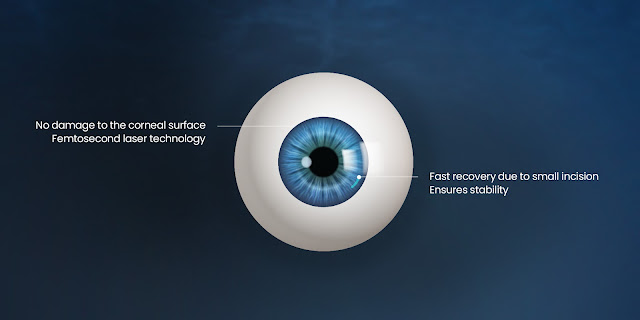
In contrast, SMILE LASIK corrects vision through a minimal incision of approximately 2 mm. Using an ultra-precise femtosecond laser generated by the VisuMax 500 system (Carl Zeiss, Germany), a micro-incision about 2 mm in size is made in the cornea, and the required amount of corneal stroma is removed to achieve vision correction. Unlike LASEK, which ablates the corneal surface, or LASIK, which creates a corneal flap via an incision, SMILE LASIK allows the laser to pass through the corneal surface, resulting in minimal damage to corneal nerves. Consequently, recovery is rapid, postoperative pain is minimal, and the risks of complications such as dry eye syndrome and myopic regression are reduced. The procedure is also more resistant to external trauma, allowing light exercise or walking as early as the day after surgery.
SMILE Pro is an upgraded version of SMILE LASIK. Although both procedures are based on the same principle, they differ in the equipment used. SMILE Pro utilizes the VisuMax 800, which delivers laser pulses at a speed approximately three times faster than that of the VisuMax 500. While SMILE LASIK requires about 25 seconds of laser application, SMILE Pro completes laser delivery in approximately 8 seconds or less, reducing the total treatment time to about one-third. This significantly lowers patient burden and decreases the risk of suction loss due to loss of ocular fixation during the procedure.


The newly added CentraLign and OcuLign functions serve as navigation tools, enabling more precise refractive correction. The CentraLign, which compensates for the eye’s central axis, detects ocular movement in real time and automatically aligns the visual center, thereby enhancing surgical accuracy. The OcuLign, designed to correct the astigmatic axis, automatically adjusts the astigmatism axis based on preoperative diagnostic data, reducing axis-related errors and providing clearer visual outcomes.
SMILE Pro allows for customized, well-centered procedures without decentration by using the visual axis as the reference point. With its extremely precise laser system, it enables meticulous correction for patients with high myopia and severe astigmatism. Both SMILE LASIK and SMILE Pro are technically demanding procedures that require a high level of concentration and refined surgical skill. Because the corneal stroma must be manually separated through a very small incision, the surgeon’s expertise—particularly with conventional SMILE LASIK—is critically important. One helpful indicator of such expertise is SMILE Doctor Certification, a credential issued by Carl Zeiss, the developer of the VisuMax system. This certification is awarded only to physicians who meet rigorous standards across multiple criteria, including surgical proficiency, quality of outcomes, and clinical experience.

Comments
Post a Comment