[Column] Still experiencing difficulty with near vision after cataract surgery? You may need to consider presbyopia lens implantation.

Recently, a man in his 60s visited our clinic. He is a university professor and had undergone cataract surgery with monofocal intraocular lens implantation at another hospital five years ago. Although he experienced improved vision right after surgery, he gradually began to feel discomfort when viewing nearby objects or reading, which led him to seek consultation. Based on the examination results, I recommended the ArtiPlus presbyopia-correcting lens implantation.
The monofocal intraocular lens he received five years ago is the type commonly used during cataract surgery. It allows the eye to focus at only one distance—either far or near. As a result, while part of the vision loss caused by cataracts can be restored, patients still need glasses or reading glasses for the other distance.
This inconvenience can become more pronounced depending on the patient’s lifestyle or occupation. In particular, those who perform prolonged near-vision tasks, such as reading or document work, may find that insufficient near vision after surgery affects their overall quality of life. In this patient’s case, given the nature of his work—which frequently involves reading books and viewing computer screens—it is likely that his symptoms became noticeable more quickly.

The ArtiPlus presbyopia-correcting lens implantation I recommended is an effective way to improve this type of discomfort.
This lens provides multiple focal points—from near to intermediate to distance—helping patients achieve a more natural range of vision. In addition, it can be custom-made in 0.5-diopter increments, allowing for a broad range of correction from high myopia to hyperopia. Therefore, it is a lens capable of correcting not only presbyopia but also cataracts at the same time.

Unlike conventional intraocular lens implantation, this procedure does not involve removing the natural lens; instead, the lens is inserted in front of the iris. Some patients feel uneasy about having an artificial lens placed in the eye, but I explain the following to reassure them.
The ArtiPlus lens is built on the proven Artiflex platform and applies Ophtec’s latest multifocal technology—the patented refractive CTF technology—which evenly distributes light. It has also obtained European CE certification, further verifying its safety.

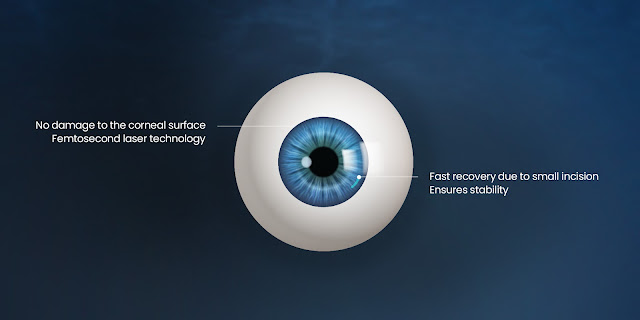
The material and structure of the lens are precisely designed to be biocompatible, allowing it to remain stable inside the eye while minimizing side effects such as glare and halos, and providing refined vision correction. Most importantly, after the procedure, patients no longer need to rely on glasses or reading glasses, and a single surgery can offer long-term, stable vision, resulting in high satisfaction. The procedure is performed under local anesthesia and takes less than 20 minutes. Recovery is also relatively quick, with most patients able to resume daily activities the following day and experiencing little to no discomfort.
In conclusion, ArtiPlus lens implantation can be an excellent option for individuals who experience visual discomfort after previous monofocal lens implantation, patients in their 40s and 50s who are developing presbyopia but do not yet have cataracts, and professionals who frequently shift their focus between near and far distances. However, the most critical aspect of this surgery is choosing a customized lens that accurately reflects the patient’s lifestyle and ocular anatomy. Before surgery, detailed evaluation of the anterior chamber depth, corneal thickness, current presbyopia symptoms, degree of discomfort, and any underlying conditions is essential. Therefore, when selecting a hospital and surgeon, I strongly recommend ensuring that the medical team has sufficient expertise, the clinic system is well-organized, and the surgeon has extensive procedural experience.

Comments
Post a Comment