Smile LASIK: 110,000 cases as part of the milestone toward 10 million procedures

Smile LASIK Reaches 10 Million Cases Worldwide
It has been reported that Smile LASIK has surpassed a cumulative total of 10 million cases worldwide among vision correction procedures. This milestone carries significance beyond a simple number, prompting patients who are considering vision correction to reassess the criteria by which they evaluate surgical options.
What 10 Million Cases Represent in the Evolution of Smile LASIK
Smile LASIK is known as a vision correction method that minimizes corneal incision, correcting vision through a small access point rather than a large flap. Since its introduction in the late 2000s, it has gradually expanded its indications as an alternative designed to address the limitations of conventional LASIK and LASEK procedures.
Reaching 10 million cases is noteworthy not because it reflects success in a single country or institution, but because it represents long-term accumulated clinical experience across diverse populations, age groups, and visual conditions. In Korea, Smile LASIK was first introduced in 2009 and has since been performed in more than 1.5 million cases, while globally the procedure has exceeded 10 million cases.
From a patient’s perspective, what matters in this trend is not whether a procedure is “new,” but whether it has been consistently chosen and applied over a long period of time. In vision correction surgery, repeatedly validated experience and data play a more critical role in assessing safety than short-term trends. In this context, cumulative case numbers serve as one reference indicator.
Structural Differences of the Minimally Invasive Approach
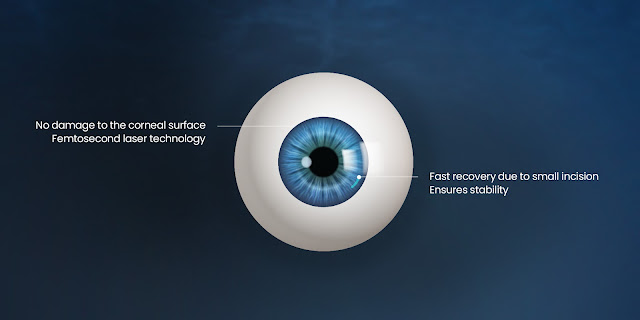
The core feature of Smile LASIK lies in its structure, which avoids wide corneal surface incisions. Using the VisuMax femtosecond laser—based on technology recognized with the 2018 Nobel Prize in Physics—the procedure separates only the corneal stroma and removes it through a small incision. As a result, changes to the corneal surface structure are relatively limited.
These characteristics are known to influence postoperative recovery and the speed at which patients can return to daily activities. However, it is important for patients to understand that a “minimally invasive” approach does not guarantee identical outcomes for everyone. Surgical suitability varies depending on factors such as corneal thickness, the presence of astigmatism, and pre-existing eye conditions. Even within Smile LASIK, surgical planning is individualized. Therefore, rather than viewing technical features as universal advantages, patients should consider how well they align with their own ocular condition.
Before Considering Vision Correction Surgery
When contemplating vision correction, many patients tend to focus on simple comparisons, such as which procedure is “better.” However, the achievement of 10 million cumulative cases suggests the need to adopt a broader perspective when choosing a surgical method. Long-term accumulated clinical data provide physicians with a foundation for predicting postoperative outcomes, defining indications, and managing potential complications.
Ultimately, what matters most to patients is not the name of a specific procedure, but finding a method that aligns with their lifestyle and eye condition. While the establishment of Smile LASIK as a viable option is certainly meaningful, the final decision should be made through thorough diagnostic testing and comprehensive consultation. This process is a key factor in determining postoperative satisfaction.

Comments
Post a Comment