Proven vision correction surgery: SMILE

SMILE is a proven vision correction procedure with more than 7 million cases performed worldwide and currently holds the No. 1 global market share among refractive surgeries. Developed to address the limitations of traditional LASIK and LASEK, SMILE is a laser vision correction procedure designed to reduce the burden of corneal damage while improving surgical satisfaction.
Comparison of LASIK, LASEK, and SMILE
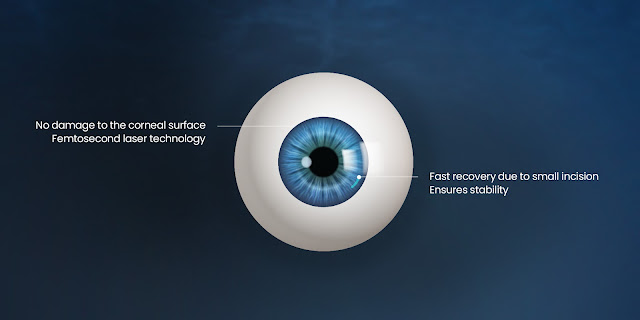
SMILE: 2 mm incision

LASIK: 20–24 mm incision

LASEK: Removal of corneal epithelium

LASEK corrects vision by removing the corneal epithelium and then applying an excimer laser. Due to epithelial removal and stromal exposure during surgery, corneal preservation may be more challenging. Recovery generally takes from one week to one month, depending on individual differences.
As shown above, SMILE was developed to overcome the disadvantages of LASIK and LASEK, offering both faster recovery and stable vision correction.
The Core Device of SMILE: VisuMax
SMILE is performed using the VisuMax system developed by ZEISS, a globally recognized ophthalmic optics company. Using femtosecond laser technology, it allows highly precise corneal tissue incision and extremely thin, accurate correction. This technology enables customized vision correction tailored to each patient’s eye structure while minimizing tissue damage for safer outcomes.
More Advanced: SMILE Pro
More recently, “SMILE Pro” has been introduced using the VisuMax 800 platform. With a surgical time of approximately 10 seconds, it enables smoother and faster vision correction. It also tracks eye movement and torsion with high precision, reducing surgical error. In addition, it recognizes the pupil center faster and more accurately, providing even greater safety and precision than previous systems.
SMILE at Bright Eye Clinic Gangnam
Bright Eye Clinic Gangnam was the first clinic in Asia to introduce the VisuMax system in 2009 and, as of 2024, has accumulated over 110,000 surgical cases. With a newly renovated 2,644 square meters surgical center and outpatient facility—including three VisuMax systems—the clinic has established an advanced medical environment. Based on extensive clinical experience and expertise, it provides high-level vision correction procedures.
The clinic is also recognized for its technical excellence and medical system through research exchange with global ophthalmic industry professionals and participation in academic conferences in the United States and Europe. It continues to serve both domestic and international patients seeking vision correction.
Various SMILE Programs
Bright Eye Clinic Gangnam offers several customized SMILE surgery programs:
Core SMILE
After minimizing corneal damage, collagen cross-linking is performed to strengthen the cornea further and enhance long-term stability.
Prime SMILE
Adequate moisture supply helps protect corneal nerve function and supports long-term maintenance of visual quality.
Signature SMILE
Using high-concentration Cure Serum PRP (platelet-rich plasma), this program promotes corneal epithelial cell regeneration, improves corneal health, and helps relieve dry eye symptoms.
In this way, SMILE offers not only the standard procedure but also SMILE Pro and various customized programs for safer, more stable, and longer-lasting vision correction. Through precise examinations and professional consultation based on each individual’s eye condition, patients can choose the most suitable vision correction method.

Comments
Post a Comment