Factors to Consider When Evaluating the Cost–Value of SMILE

SMILE, often referred to as a breakthrough in vision correction surgery, combines the advantages of traditional LASIK and LASEK procedures. It is designed to reduce postoperative discomfort and significantly accelerate visual recovery.
Many patients consider SMILE for its safety profile and rapid return to daily activities; however, the relatively high cost often becomes a point of consideration. In this article, we will explore the factors that contribute to SMILE pricing and the key elements to consider when evaluating its cost–benefit value.
SMILE LASIK Cost and Factors Influencing Pricing
In the current ophthalmic market in Korea, the average cost of SMILE is generally higher compared to conventional LASIK or LASEK procedures. There are several technical reasons behind this pricing structure.
 |
| SMILE Pro Surgical System – ZEISS VISUMAX 800 |
In addition to the high cost of the equipment itself, SMILE also involves expensive disposable consumables that are used for each patient on a single-use basis, which significantly increases the overall procedural cost. Furthermore, a licensing fee is paid to ZEISS (Germany), the developer of SMILE technology, for each procedure performed. This is a global standard practice and represents a fixed cost component that accounts for a substantial portion of the total surgery fee.
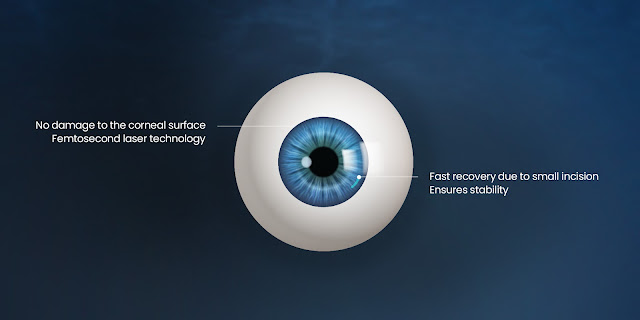
A high level of surgical expertise is also required. SMILE involves a minimally invasive incision of approximately 2 mm, after which the surgeon must manually extract the laser-separated corneal lenticule. Because this step heavily depends on the surgeon’s precision and skill, the cost also reflects the expertise and experience of highly trained specialists.
Why Do Prices Vary?
Even for the same SMILE procedure, costs may differ between clinics due to variations in additional services and options provided. The use of next-generation systems such as the recently introduced SMILE Pro may result in shorter surgical time and improved precision; however, it can also lead to higher procedural costs compared to standard SMILE.

In cases where the cornea is thin or the patient has high myopia requiring corneal strengthening, corneal collagen cross-linking (CXL) may be performed in combination with the procedure. In addition, additional costs may apply if treatments such as autologous serum eye drops for dry eye prevention or specialized laser-based ocular surface management are included.
Furthermore, comprehensive preoperative systems involving dozens of detailed diagnostic tests, as well as postoperative follow-up examinations and enhancement (retreatment) guarantee programs, are often reflected in the overall cost. Clinics offering lifetime guarantee systems may have higher pricing due to the inclusion of long-term postoperative care.
Precautions Before Surgery and How to Make an Informed Decision
When considering the cost of SMILE, choosing a clinic based solely on lower price can be risky, as the eye is an organ that cannot easily be reversed once operated on.
Although discounts such as word-of-mouth promotions, referral incentives, or student discounts are often available, it is important to carefully verify whether the surgical equipment is up-to-date and whether postoperative care and follow-up services are included in the total cost, rather than being charged separately.

In addition, ZEISS certifies experienced surgeons with designations such as “SMILE Doctor” based on their level of surgical expertise. When selecting a clinic, it is important to prioritize the surgeon’s experience with SMILE procedures and their proficiency in astigmatism correction.
Furthermore, even if a patient is prepared to undergo the procedure, SMILE may not be suitable depending on individual eye conditions. Therefore, it is essential to choose a clinic that prioritizes comprehensive diagnostic results and recommends the most appropriate and safest surgical option tailored to each patient’s condition.


Comments
Post a Comment