[Vision Correction Surgery Comparison] SMILE vs. SMILE Pro vs. SmartNova: Which Procedure Is Right for You?

These days, many people are considering vision correction surgery to free themselves from the inconvenience of wearing glasses or contact lenses. Beyond LASIK and LASEK, third- and fourth-generation vision correction procedures, which are designed to minimize corneal damage and allow for faster recovery, have recently become increasingly popular.
However, when you actually visit an ophthalmology clinic, you may find yourself confused by the many similar-sounding procedures, such as SMILE, SMILE Pro, and SmartNova, and wonder what the differences are between them.
Today, based on comparison materials from Bright Eye Clinic, we’ll take an easy-to-understand look at the key features, equipment, and differences among these three leading vision correction procedures.

1. Proven Stability: SMILE®
The first and most widely recognized procedure is SMILE.
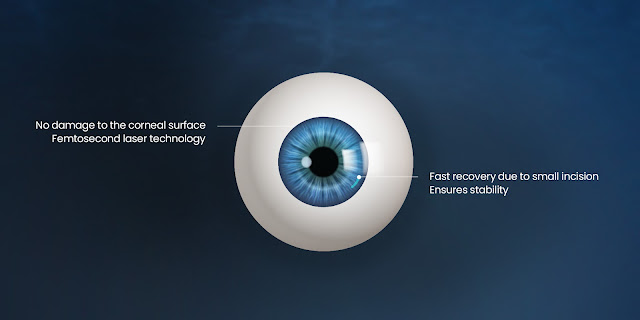
• Basic principle: Unlike LASIK, SMILE does not require the creation of a corneal flap. Instead, it uses a femtosecond laser that passes through the corneal surface to create a tiny disc-shaped piece of tissue called a lenticule within the cornea. The lenticule is then separated and removed through a very small incision. SMILE is a leading vision correction procedure developed by ZEISS.
• Equipment used: ZEISS VisuMax 500
• Laser treatment time: Approximately 24 seconds

2. The Evolution of Speed and Precision: SMILE® Pro
SMILE® Pro is an advanced version of the original SMILE procedure.
• Basic principle: SMILE Pro is based on the same fundamental principle as conventional SMILE, but features significantly enhanced laser speed and automated centration and alignment functions.
• Equipment used: ZEISS VisuMax 800
• Laser treatment time: Less than 8 seconds (approximately three times faster than the original procedure)
• Key features: With an extremely short laser treatment time of less than 8 seconds, SMILE Pro significantly reduces the potential impact of variables during surgery, such as involuntary eye movement, patient tension, and ocular surface dryness.
• Precision correction: SMILE® Pro incorporates CentraLign centration technology and OcuLign cyclotorsion compensation, enabling more precise correction, particularly for patients with significant astigmatism, while reducing concerns about rotational misalignment of the treatment axis.

3. Next-Generation Intelligent Correction System: SmartNova
Recently gaining attention, SmartNova is a next-generation vision correction approach that maximizes precision and real-time control technologies.
• Basic principle: While maintaining the fundamental approach of removing a corneal lenticule, SmartNova integrates precision treatment planning with a real-time intelligent correction system.
• Equipment used: SCHWIND ATOS (upgraded system)
• Laser treatment time: Approximately 10 seconds (using a high-speed 4 MHz laser)
• Key features: SmartNova is particularly focused on real-time control. Even if the eye moves or rotates slightly during surgery, the CentraX® intelligent correction system detects these movements in real time and automatically compensates for them. This helps minimize the need for redocking, the process of repositioning the device during surgery.
• Precision: SmartNova offers ultra-precise refractive correction in increments as small as 0.05 D (diopters). Its region-specific asymmetric scanning array (Low Dose) technology is designed to minimize corneal and thermal tissue damage, thereby maximizing safety.
Key Differences at a Glance
| Category | SMILE® | SMILE® Pro | SmartNova |
|---|---|---|---|
| Core advantage | Small incision and faster recovery | Extremely fast treatment and predictability | Real-time intelligent centration and ultra-precise correction |
| Equipment | VisuMax 500 | VisuMax 800 | SCHWIND ATOS |
| Laser treatment time | Approx. 24 seconds | Less than 8 seconds | Approximately 10 seconds |
| Correction technology | Standard centration | Automatic centration and cyclotorsion correction | Active, real-time compensation for eye rotation and position |
The most appropriate vision correction procedure can vary depending on factors such as corneal thickness, degree of astigmatism, and lifestyle. We recommend undergoing a comprehensive eye examination and having an in-depth consultation with an ophthalmologist to determine the safest and most effective option for your individual needs.

Comments
Post a Comment