SMILE LASIK vs. LASEK: Understanding the Differences and Choosing the Right Procedure for You

When considering vision correction surgery, two of the most commonly compared procedures are SMILE LASIK, a third-generation vision correction technique, and LASEK, a traditional second-generation procedure.
Although both procedures share the same ultimate goal of correcting refractive errors to achieve clear vision, they differ significantly in their medical approach to treating the cornea, postoperative recovery process, and suitability for different patients. To achieve successful vision correction, it is essential to understand the characteristics of each procedure and choose the one best suited to your individual eye condition.
Differences in Corneal Treatment and Structural Stability
The key difference between the two procedures lies in which part of the cornea is treated and how the treatment is performed.
LASEK involves removing the epithelium, the outermost layer of the cornea, using diluted alcohol or a laser. An excimer laser is then applied to the exposed corneal stroma to reshape the cornea and correct its refractive power.
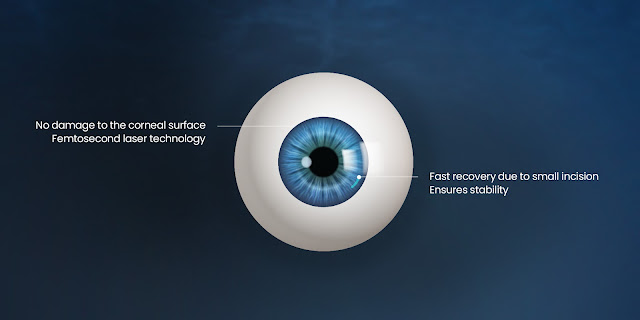
In contrast, SMILE LASIK does not require the corneal epithelium to be separated or removed. Instead, a femtosecond laser passes through the intact corneal surface and precisely creates a small, lens-shaped piece of tissue, known as a lenticule, within the corneal stroma. The lenticule is then extracted through a tiny incision measuring approximately 2 mm.
These differences in surgical technique are closely related to the cornea's structural integrity. With LASEK, the corneal epithelium needs time to regenerate, and patients may experience considerable pain and excessive tearing until the epithelial layer has fully healed. By contrast, the minimally invasive incision used in SMILE LASIK helps minimize damage to the corneal surface nerves. This can substantially reduce postoperative discomfort and offers a structural advantage associated with a lower risk of dry eye symptoms.

Comparing Postoperative Pain and Recovery Time
The time required to return to daily activities is another important factor distinguishing the two procedures.
Following LASEK, recovery typically takes around three to five days for the corneal epithelium to regenerate and stabilize. During this period, patients must wear therapeutic bandage contact lenses to protect the eye from external irritation and support epithelial healing. Pain and light sensitivity may also limit activities such as using electronic devices or going outdoors. Because vision gradually improves and stabilizes toward the intended outcome, regular follow-up care over several months may be necessary for optimal visual recovery.
In contrast, SMILE LASIK generally allows patients to resume most daily activities as early as the day after surgery. After experiencing mild foreign-body sensations or stinging on the day of the procedure, patients can often return to work or school, wash their face, and engage in light exercise the following day without needing bandage contact lenses.
For busy individuals, employees who find it difficult to take time off work, and those preparing for military service, the shorter recovery period can be a particularly attractive advantage.
How to Choose the Right Procedure for Your Eyes
Does this mean that the newest surgical technique is always the best choice for everyone? Absolutely not. The most appropriate procedure varies depending on each patient's corneal thickness, degree of myopia and astigmatism, lifestyle, and occupational requirements.
For patients with high myopia or severe astigmatism who require greater amounts of corneal tissue correction, or those with particularly thin corneas, LASEK may be structurally preferable in certain cases because it can help preserve an adequate amount of residual corneal tissue.
Furthermore, for individuals exposed to a high risk of direct physical impact to the eyes, such as boxers, martial artists, and special forces personnel, LASEK may offer advantages in long-term structural safety because it does not involve creating a corneal flap and uses no lenticule-extraction incision of the type used in SMILE LASIK.
Ultimately, the most important step is to avoid relying solely on standardized marketing claims or other people's experiences and instead undergo a comprehensive eye examination.
A thorough assessment may include corneal topography, corneal thickness measurements, corneal endothelial cell counts, and analysis of pupil size under low-light conditions. By reviewing these ophthalmic findings and having an in-depth consultation with an experienced ophthalmologist, patients can determine which procedure is safest for their individual eyes.
Choosing the right procedure based on a comprehensive examination is the best way to pursue clear vision and maintain long-term eye health.

Comments
Post a Comment